
How to Sell a Car That Still Has Payments and Get the Best Price Fast
So you owe money on the car and you want to sell it. Cool. People do this every day. Nobody really explains how though, which is why you're here probably reading your fifth article and getting more confused than when you started.
Let me just walk you through it the way I'd explain it to a friend over coffee.
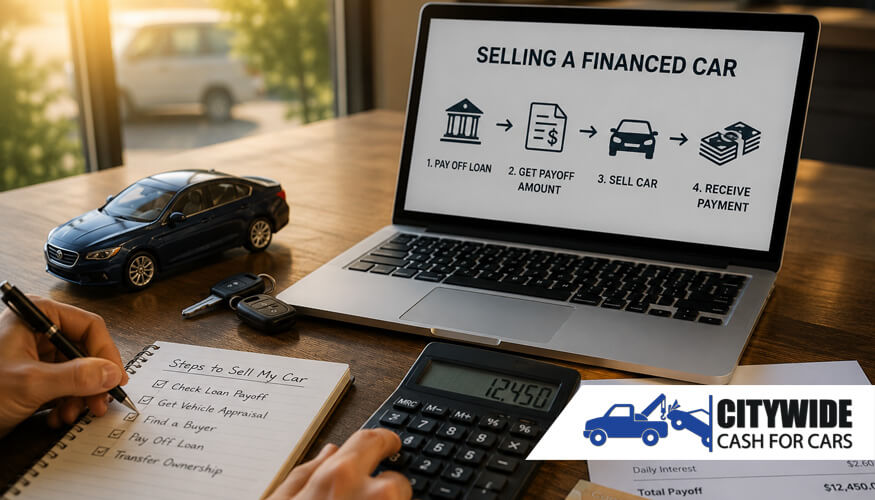
Step one: call your lender. Today.
Not tomorrow. Today.
Ask them for your payoff amount. That's not the same as your balance — it's what it costs to actually close the loan right now, this minute, including the interest that's been quietly stacking up since your last payment. Sometimes there's a small fee tacked on too. Annoying but normal.
Get this number in writing. Email works. While you've got them on the line, ask how long that payoff is good for (usually around two weeks) and how exactly the buyer or dealership needs to send the payment. Some lenders want a wire. Some want a certified cheque mailed to a weirdly specific address. Knowing this ahead of time saves you from a buyer getting cold feet later because the whole thing started feeling sketchy.
Step two: figure out what the car's actually worth
Skip the "what's my car worth" calculators. They lie. Or at least they guess, badly.
Do this instead. Open AutoTrader. Open Kijiji. Search your exact car — year, make, model, trim — and filter by your area. Look at what's selling, not what people are listing for. Huge difference. People list at fantasy prices and then sit on the car for four months. You want the actual sold prices.
If your car's under 100,000 km and looks decent, you're probably in private-sale territory. If it's beat up, high-mileage, or you just want it gone, you're looking at trade-in or cash-buyer numbers, which are also a good option. That's just how it is.
Now you've got two numbers. What you owe. What it's worth. Compare them.
You're going to be in one of three boats
Boat one: car's worth more than you owe. Easiest situation. Sell, pay off the loan, pocket the difference. Done.
Boat two: it's basically a wash. Also fine. Sale covers the loan, you walk away clean, no money changes hands beyond the payoff.
Boat three: you owe more than the car's worth. This one's called being upside down. It's super common, especially if you bought new in the last few years. New cars depreciate like crazy the second you drive off the lot. If you put little down or rolled old debt into the loan, you might owe thousands more than the car will sell for. You can still sell it. You just have to cover the gap somehow — either out of pocket or by rolling it into a new loan if you're trading up.
Most people don't realize which boat they're in until they actually do the math. So do the math. Right now, before you read another paragraph.
Now — how do you actually sell it?
Three real options. Each one's a different trade between speed, hassle, and money.
Option 1: Sell to a dealership or a cash-for-cars place
Fastest. Easiest. Best price.
These guys handle the lien payoff for you. They call your lender, pay it off directly, hand you a check for whatever's left. If you're upside down, they'll either roll the negative equity into a new car loan or ask you to cover the gap in cash.
Pick this if you need the car gone this week. Or if it's a mess and you don't want to deal with strangers showing up at your door asking why the AC blows warm. The price hit is real but sometimes convenience is worth it.
Option 2: Sell to a private buyer
Best price. Most work. Most coordination.
Here's how a clean private sale on a financed car looks:
You and the buyer meet at your lender's branch (or your bank, if it's one of the big ones). The buyer pays the payoff straight to the lender — certified cheque or wire. The lender releases the lien. If the sale price was higher than the payoff, the buyer hands you the difference separately. You sign over the registration once the lien is gone.
If your lender doesn't have a local branch, this whole thing stretches out a few extra days because the lien release has to come by mail. Buyers get twitchy during that gap. Just be straight with them from the first message. "There's a lien on the title, here's exactly how the payoff works, here's the timeline." Reasonable buyers are fine with it. The flaky ones disappear, and honestly, good — saves you time.
Option 3: Pay it down first, then sell normally
If you're only a little upside down and you've got some cash, sometimes the smartest play is paying the loan down to break-even and then listing it. Skips the whole awkward lender dance. Looks like any other private sale to the buyer. Way less friction.
Worth thinking about if you've got the cash sitting around doing nothing.
Getting the best price quickly — what actually moves the needle
People rush to list the car before doing the cheap easy stuff that adds hundreds, sometimes thousands, to the offer. Don't be that person.
- Detail it. Properly. Not a quick rinse at the gas station. I mean a real interior shampoo, the headlights polished so they're not foggy, exterior buffed. A clean car sells for $500 to $1,500 more than the same car with fries under the seat. The math is dumb but it's real.
- Find every receipt. Oil changes, brakes, tires, anything. Buyers pay more for documented maintenance because it lowers their risk.
- Take real photos. Daylight. Clean background. Fifteen, twenty shots. Engine bay, all four corners, trunk, dashboard, odometer. Most sellers post four phone pics from a parking lot at dusk and wonder why they only get lowballers.
- Price it a few hundred above your number. Everyone negotiates. Build the room in.
- Mention the financing in the ad. I know it feels like a turnoff. It isn't. Saying "lien on title, payoff handled at sale" upfront filters out the tire-kickers and pulls in serious buyers who get how this works.
One last thing — please don't skip this
Never sign the registration over to a buyer before the lien's cleared. Doesn't matter how nice they seem. The lien stays attached to the car until your lender releases it, and a transferred registration with an active lien is a legal mess you really don't want to learn about the hard way.
Same the other way. Don't hand a dealership the keys until you've got something in writing about exactly when and how they're paying off the loan.
That's it. Selling a car you still owe on isn't hard. It's just got more moving parts than a normal sale. Work through them in order, keep everything in writing, and two weeks from now you're done.
