
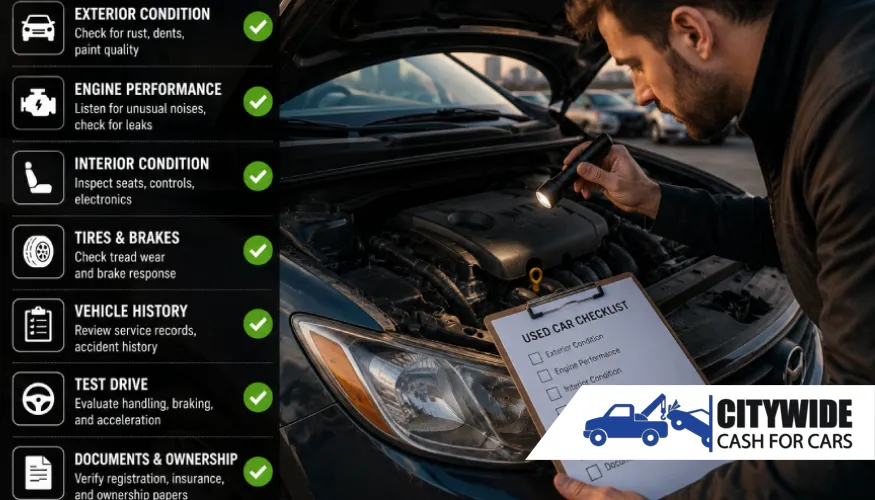
Used Car Checklist | Essential Guide for Smart Buyers (2026)
Buying a used car right now is honestly a bit of a headache. Prices still haven't come back down to where they were before 2020, EV batteries from the early wave are hitting the age where they start needing replacement, and sellers have gotten really good at making tired cars look showroom-fresh with a $200 detail. Show up unprepared and you'll pay for it — usually within the first six months of ownership.
So here's the checklist I wish someone had handed me the first time I bought used. Work through it top to bottom. Don't skip the boring parts, because that's where the money hides.
Do Your Homework Before You Show Up
I've seen people drive two hours to see a car and buy it the same day because they were tired of looking. Don't be that person.
Pull a vehicle history report first. Carfax is the go-to, but I like running AutoCheck too — sometimes one catches what the other misses. What you're hunting for: salvage or rebuilt titles, flood history, odometer weirdness, and gaps in service records. No service history at all isn't automatically a dealbreaker, but it means you need to look twice as hard when you get there.
Then check the price against reality. KBB and Edmunds give you a ballpark, but the real number comes from scrolling actual local listings for the same year and trim. If the car you're looking at is way cheaper than everything else, something is off. Cars aren't priced low by accident.
Walking Around the Car
Do this outside, in daylight. Rain hides everything, and dealership floor lights are designed to make paint look better than it is.
Crouch down and look along the side of the car at eye level. The reflection should be smooth. Waves, ripples, or a slightly different shade on one panel means it's been repainted, which almost always means it's been hit. A little overspray on the black rubber trim around the windows is a dead giveaway too.
Bring a fridge magnet. Sounds silly, works great. Body filler isn't magnetic, so if the magnet doesn't stick where it should, you've found bondo.
Now the tires. If one tire is worn more on the inside than the outside, the alignment is off — or worse, something in the suspension is bent. Four mismatched tire brands tells you the previous owner cheaped out on maintenance, which usually means they cheaped out on everything else too. And check the little four-digit code on the sidewall — that's the week and year the tire was made. Anything over six years old is done, tread or no tread.
Under the Hood
You don't need to know what a camshaft position sensor does. You just need to spot the obvious stuff.
Ask the seller to leave the car cold when you show up. Pop the hood before starting it. Unscrew the oil cap and look underneath — if there's a milky, foamy layer stuck to it, walk away. That means coolant is getting into places it shouldn't, and you're looking at a repair bill that could hit four figures.
Pull the dipstick. Oil should look like maple syrup, maybe darker. If it's gritty, sparkly, or smells burnt, that's a problem.
Squeeze the radiator hoses gently. They should feel firm but slightly soft, not rock hard or squishy. Cracks on the belts, oil pooling at the bottom of the engine, green or pink puddles on the ground — all bad signs. Battery corrosion isn't a dealbreaker on its own but it usually points to an owner who let other things slide too.
Sit Inside and Poke Everything
Just sit there for a second and look around. If the steering wheel is shiny from wear, the driver's seat is collapsed on the side, and the pedals are worn smooth — but the odometer says 60,000 km — someone's been rolling it back. Wear should match miles.
Then start pressing buttons. Every single one. Windows up and down from both switches. Locks. Mirrors. AC on cold, then heat on hot. Heated seats if it has them. Reverse camera. Bluetooth. Every warning light on the dash should light up when you turn the key, then go off. If one doesn't come on at all, someone pulled the bulb to hide a problem.
Take a good sniff. If the car smells like a perfume factory, ask yourself what they're covering up. Cigarettes never fully leave upholstery. Neither does mildew from flood damage, and that one's a bigger deal.
The Test Drive
Five minutes around the block is not a test drive. Give yourself twenty minutes minimum and cover different conditions.
Start it cold — that first minute tells you a lot. Any knocking, ticking, or rough shaking before it warms up matters. Get it on the highway and see if the steering wheel shakes, if it pulls to one side when you let go, or if wind whistles through a door seal that isn't sealing anymore. Find an empty lot and hit the brakes hard once. The pedal should feel firm, and the car shouldn't shudder to a stop.
Roll the windows down and drive slowly through a parking lot with the wheel turned. Clicking sounds mean CV joints are on their way out. Clunks over speed bumps mean worn suspension bushings. And keep the radio off the whole time. You can't hear a car through Spotify.
Pay a Mechanic to Look at It
This is the step everyone skips, and it's the one that saves you the most money. A hundred bucks at an independent shop gets the car on a lift, and a mechanic will spot rust on the frame, a leaking transmission pan, or brake lines about to fail — none of which you can see from a driveway.
If the seller says no to an inspection, that's your answer. Thank them and leave. A seller with nothing to hide never refuses.
Handling the Paperwork
Bring your research with you. Print the comparable listings, highlight the history report, and write down anything you found during the walkaround. Then make your offer and stop talking. Whoever speaks first usually loses.
Before any money moves: the name on the seller's ID needs to match the name on the title, the VIN on the dashboard needs to match the VIN on the title and the sticker inside the driver's door, and you never — ever — accept "I'll mail you the title later." Get a bill of sale on paper, signed by both of you, even if it's a private deal between neighbors.
Selling Your Old One
If you're upgrading, don't just hand your current car to the dealer without thinking about it. Trade-ins are easy, but easy costs you — usually a few thousand dollars compared to selling it yourself. Private sale takes more effort but pays a lot better.
That said, private selling isn't for everyone. If your car's older, not running, or you just don't want strangers showing up at your house to lowball you, companies offering cash for cars Calgary will quote you the same day and haul it away. You won't get top dollar, but for the right situation — an old beater, a car that won't pass inspection, or just wanting the whole thing done by Friday — it's the sensible move.
One Last Thing
The good used car deals aren't lying around waiting to be found. They come out of patience and a willingness to walk away. Every step in this list exists because someone before you got burned skipping it. Borrow their lessons instead of paying tuition yourself.
Take another weekend if you need to. The right car is worth it.
