
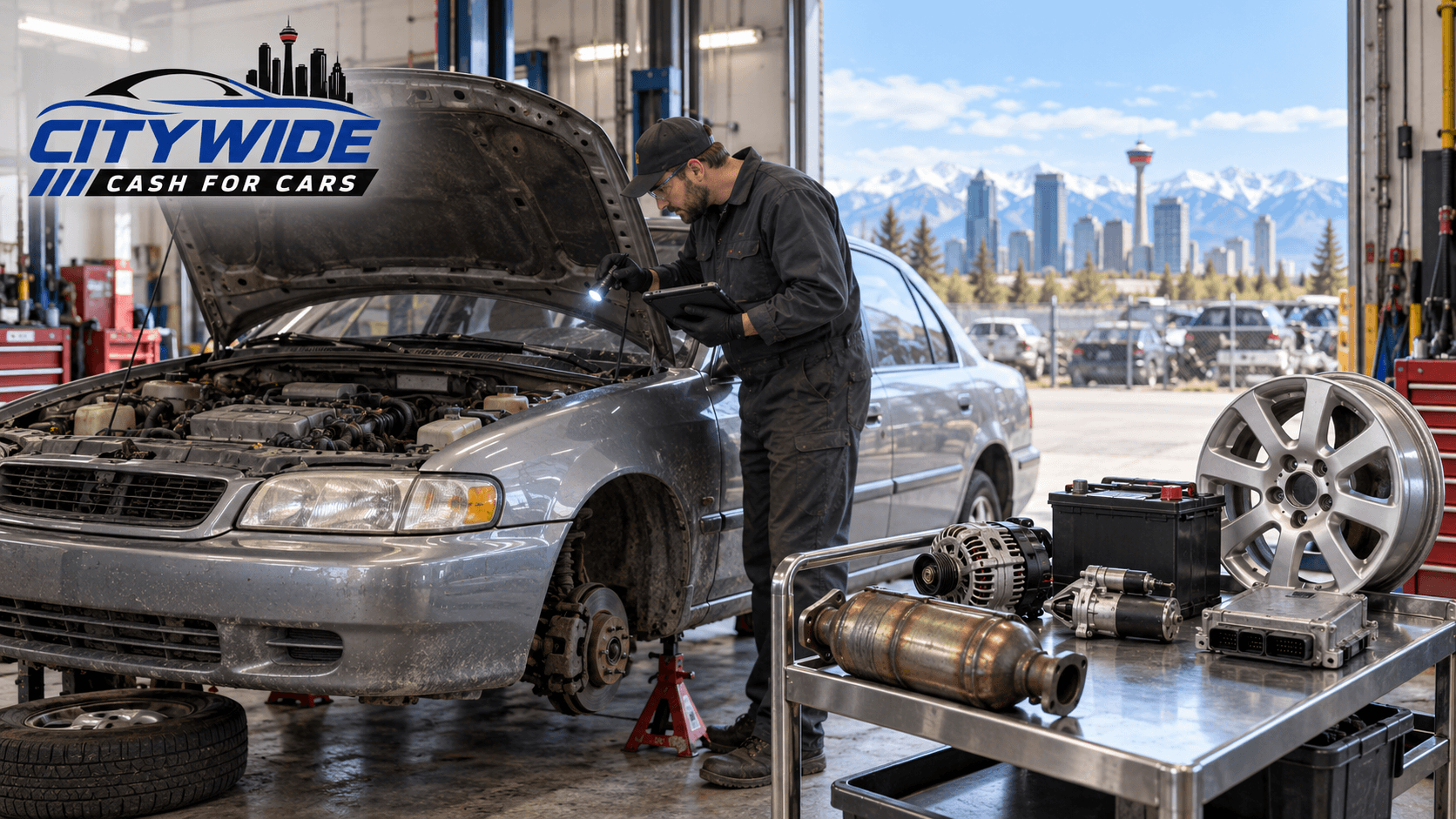
Most Valuable Parts in a Junk Car| What They’re Worth and How to Find Them in Alberta
When most people look at an old vehicle sitting in a driveway or garage, they see a problem that needs to be removed. A damaged, unused, or non-running car may seem like nothing more than scrap metal taking up space. However, a junk car can actually contain several valuable parts that are worth far more than many owners realize.
In Alberta, where extreme weather conditions, long driving distances, and a strong automotive culture create high demand for vehicle components, junk cars can hold significant value. Whether you are planning to sell your vehicle to a recycler or want to understand what makes your car valuable, knowing which parts are worth the most can help you make a smarter decision.
This guide explains the most valuable parts in a junk car, what they may be worth, and how to identify valuable components before selling your vehicle.
Why Junk Cars Can Still Have Significant Value
A vehicle does not lose all its value just because it no longer runs. Many parts inside an old or damaged car can be reused, repaired, or recycled.
Professional auto recyclers evaluate vehicles based on:
- Condition of major components
- Demand for replacement parts
- Vehicle make and model
- Age and mileage
- Scrap metal prices
- Location and market demand
In Alberta, vehicles often face harsh winters, road salt exposure, and challenging driving conditions. Because of this, replacement parts for popular vehicles are always in demand.
A car with a failed engine may still have a valuable transmission, electronics, wheels, catalytic converter, or body parts.
1. Catalytic Converter: One of the Most Valuable Junk Car Parts
The catalytic converter is often one of the most valuable components found in a junk vehicle.
This exhaust system part contains precious metals such as:
- Platinum
- Palladium
- Rhodium
These materials allow recyclers to recover value even from vehicles that are no longer repairable.
Estimated Value:
A catalytic converter may be worth anywhere from $50 to over $1,000, depending on the vehicle type, converter condition, and precious metal content.
Vehicles with potentially valuable catalytic converters include:
- Trucks
- SUVs
- Hybrid vehicles
- Luxury models
Before selling a junk car, check whether the catalytic converter is still installed. It can significantly affect the overall value of your vehicle.
2. Engine: The Heart of Your Vehicle’s Value
Even if a vehicle is considered junk, the engine may still have resale value.
A working engine from a popular vehicle can be reused by mechanics, rebuilders, or owners looking for affordable repairs.
Engine value depends on:
- Mileage
- Maintenance history
- Vehicle popularity
- Engine type
- Current demand
Estimated Value:
Used engines can range from a few hundred dollars to several thousand dollars depending on the vehicle and condition.
Diesel engines, truck engines, and engines from reliable models often have stronger demand.
Before selling your junk car, determine whether the engine still runs or if it can be rebuilt. A damaged vehicle with a good engine may be worth much more than expected.
3. Transmission: A High-Demand Replacement Component
The transmission is another major part that can retain value after a vehicle reaches the end of its life.
Replacing a transmission is expensive, so many vehicle owners look for used alternatives from recycled vehicles.
Estimated Value:
A used transmission may sell for $300 to $2,000+ depending on:
- Vehicle model
- Automatic or manual type
- Mileage
- Condition
Trucks, SUVs, and popular passenger vehicles often have strong transmission demand.
If your junk car has a functioning transmission, it may be one of the biggest contributors to its resale value.
4. Wheels and Tires: Small Parts With Big Demand
Many people overlook wheels and tires when selling a junk vehicle, but they can have excellent resale potential.
Alberta drivers often need reliable tires because of changing weather conditions. Winter tires, alloy wheels, and newer tire sets can be especially valuable.
Possible Value:
- Used tires: $50–$400+
- Alloy wheels: $100–$800+
Factors affecting value include:
- Tire tread depth
- Brand quality
- Wheel condition
- Vehicle compatibility
A junk car with recently replaced tires may be worth more than a similar vehicle with worn-out tires.
5. Electronics and Technology Components
Modern vehicles contain expensive electronic systems that can be reused.
Valuable electronic parts may include:
- Navigation systems
- Infotainment screens
- Control modules
- Sensors
- Cameras
- Audio systems
- Computer systems
Newer vehicles often have more valuable electronics because replacement parts from dealerships can be expensive.
Estimated Value:
Depending on the component, electronics may range from $50 to several hundred dollars.
As vehicles become more technology-focused, electronic components continue to increase in demand.
6. Body Parts and Exterior Components
Even a damaged vehicle may have body parts that are still usable.
Common valuable exterior parts include:
- Doors
- Hoods
- Fenders
- Mirrors
- Headlights
- Taillights
- Bumpers
If only one area of the vehicle was damaged, other body parts may still be in excellent condition.
Estimated Value:
Individual body parts can range from $50 to several hundred dollars depending on the vehicle.
Popular vehicle models usually have stronger demand because more people need replacement parts.
7. Batteries: Especially Hybrid and Electric Vehicle Batteries
Vehicle batteries can also hold value.
Traditional car batteries contain recyclable materials, while hybrid and electric vehicle batteries can be significantly more valuable.
Possible Value:
- Standard battery: $50–$150
- Hybrid battery: Hundreds or more depending on condition
With increasing electric vehicle adoption, demand for battery recycling and replacement continues to grow.
How to Identify Valuable Parts in Your Junk Car
Before selling your vehicle, follow these steps to understand what you have.
Check the Vehicle’s Make and Model
Some vehicles naturally have higher part demand.
Popular trucks, SUVs, and reliable brands often attract more buyers.
Inspect the Condition
A part’s value depends heavily on whether it works.
Check:
- Does the engine start?
- Does the transmission shift?
- Are electronics functioning?
- Are tires still usable?
Research Replacement Costs
A simple way to estimate value is to check how much replacement parts cost.
Expensive parts often have stronger resale demand.
Get Professional Evaluations
Auto recyclers and junk car buyers can quickly assess which components are valuable.
Getting multiple opinions helps ensure you receive a fair offer.
Should You Remove Parts Before Selling a Junk Car?
Some owners consider removing valuable parts before selling their vehicle.
This can sometimes increase your total return, but it depends on your situation.
Removing parts requires:
- Mechanical knowledge
- Proper tools
- Storage space
- Time
If you do not have experience, selling the complete vehicle to a professional recycler may be easier and safer.
Many recyclers already have systems for evaluating, removing, and reselling usable components.
Tips to Get the Highest Value for Your Junk Car in Alberta
If you want the best possible price, consider these tips:
1. Do Not Hide Important Information
Be honest about the vehicle’s condition. Transparency helps buyers provide accurate offers.
2. Compare Multiple Buyers
Contact different:
- Auto recyclers
- Junk car companies
- Salvage yards
Prices can vary significantly.
3. Prepare Vehicle Information
Have these details ready:
- Year
- Make
- Model
- Mileage
- Vehicle condition
- Ownership documents
4. Consider Complete Vehicle Value
Sometimes selling the entire junk car is more profitable than removing individual parts.
Professional recyclers consider all components, including parts you may not recognize as valuable.
Final Thoughts: Your Junk Car May Be Worth More Than You Think
A junk car is not just scrap metal. Inside that old vehicle could be a valuable engine, transmission, catalytic converter, electronics, tires, or recyclable materials worth hundreds or even thousands of dollars.
In Alberta, where vehicle ownership is essential and replacement parts are always needed, damaged and unwanted cars can still provide significant value.
The key is understanding what makes your vehicle valuable, researching important components, and choosing the right selling option. Whether your car is old, damaged, or no longer running, knowing the worth of its parts can help you get the best possible return instead of accepting a low offer.
